
Very few people enjoy tax season, but if you own a small business, this time of year can be a massive headache. Countless exemptions, credits and deductions are available to you, but you don’t necessarily have the troves of accountants and lawyers available that a Fortune 500 company would. Just when you think you’ve done your taxes just right, you find out that you could have deducted this or that you shouldn’t have deducted that.
Although we can’t list every tax deduction available, we want to let you know about a few major ones you should take full advantage of. But beware – don’t get too carried away, or you might find yourself entangled in far more problems than you had before.
Driving

There are two different ways to deduct automotive expenses. The first is the actual expense method, where you keep track and deduct all of your actual business-related expenses using the car.
You can also opt for the standard mileage rate method. For 2014, you can deduct 56 cents per mile driven. (That jumps to 57.5 cents for 2015.) Also eligible for deductions are those pesky parking and toll fees; the business part of the interest on your car loan; and state and local property taxes.
Beware: If you try to deduct parking tickets and fines for blowing the toll booth, expect an unfriendly letter from the IRS.
Continuing Education
You can write off any fees for professional development events, corporate conferences, team-building activities and trade shows. Also, feel free to deduct subscriptions to trade magazines and webinars – anything that helps you keep up to date with your skills and industry demands.
Beware: Of course you want to go to that high-tech trade show coming to town. But if you’re an accountant, insurance salesman or something else that doesn’t relate to the conference you’re attending, keep it off your tax forms. Also, your Sports Illustrated subscription is not tax-deductible unless you’re a sports writer.
Entertainment

If you pay for entertaining current or potential customers / clients, you can deduct half of the cost. But one of two criteria must be met: It must be directly related to the business and business is discussed at the event, or it must be associated with the business and entertainment takes place immediately before or after a business discussion.
Beware: Going to the baseball game with your five closest friends from high school does not constitute business entertainment.
Professional Fees
Do you have an accountant who runs your books? Deduct it. An attorney who provides legal counsel? Write it off. Any professional services fees are 100 percent tax-deductible.
Beware: We understand that running a business is stressful. But writing off your visits to a therapist because you think it will help you operate your business more effectively probably won’t work with the IRS.
Employee or Client Gifts

Want to show employees and clients your appreciation? Uncle Sam approves — any gift to a client or employee can be deducted in full, up to $25 per year per person.
Beware: If your mother-in-law uses your law firm to have her traffic tickets fixed, she should receive the same gift that other clients receive.
Utilities
The gas, electric, trash, water and telephone bills at the office are all fully tax-deductible. If you work from home, you should measure your work area and divide it by the total square footage of your home to determine how much you can claim.
Beware: If you deduct telephone bills at the office, they must be for business calls, not personal ones.
Rent

If you rent office space, those monthly payments are tax-deductible. If you work outside of your rented apartment, you once again should measure the work area and divide it by the total square footage of the unit where you reside.
Beware: There’s one important caveat to this rule: you cannot deduct any rent if you have any equity whatsoever in the property or if there’s an agreement that you will receive some in the future.
Interest
Feel free to deduct the interest and carrying charges used to finance business purchases on credit. You can also deduct the interest on your personal loans, provided that money was used for business purposes.
Beware: Did you max out that Visa card to remodel your basement? Unless that’s your primary work location, you cannot deduct that.
Depreciation

If you purchase an asset that will be used beyond the current tax year, you must spread the depreciation tax deduction out over the expected life of the asset. For instance, if you buy a machine for your business that is expected to last 10 years, you have to slowly write off that expense over time.
Beware: Certain things can’t be written off even if they do depreciate, including inventory and land.
Charity
Any charitable contributions that a company makes can be written off. If your business is a partnership, LLC or S corporation (taxed like a partnership), the deduction can be passed down to your personal tax return. A C corporation can deduct charitable contributions from its own tax returns.
Beware: Charity does not include your brother-in-law’s political campaign or your daughter’s Kickstarter campaign selling hipster sunglasses.
For more information on business tax deductions, check out these resources:
Cedar Creek provides a picturesque option for amateur, hobbyist, and professional photographers alike. In fact, so many people come to Cedar Creek for photo opportunities that we decided to pull together a variety of tips to help our guests capture the perfect shot. In this lesson we will be reviewing the three main settings on a camera, which are ISO Sensitivity, Aperture, and Shutter Speed. These settings will need to be adjusted to capture all genres of photography.
ISO Sensitivity
Essentially, ISO Sensitivity is a measure of the camera’s ability to capture light. Digital cameras convert the light that falls on the image sensor into electrical signals for processing. ISO sensitivity is raised by amplifying the signal.
- Tip 1 from Nikon (DSLR Camera Basics) Low ISO sensitivities require slow shutter speeds for correct exposure, resulting in blur caused by subject motion. High ISO sensitivities allow correct exposure to be achieved at faster shutter speeds, making it possible to take photographs that “freeze” motion.
- Tip 2 from Nikon (DSLR Camera Basics) When lighting is poor, you can use a flash to light portrait subjects. Flash units, however, have limited range. If you raise ISO sensitivity, you can optimally expose both the portrait subject and the background without using a flash at all.
- Tip 3 from PhotographyLife.com When there is plenty of light, you should always use the lowest ISO, to retain the most detail and to have the highest image quality. This means you should increase the ISO when there is not enough light for the camera to be able to quickly capture an image.

Aperture
When you adjust your aperture you are adjusting the setting that controls the amount of light you let in with each exposure. The larger the opening, i.e. the wider the aperture, the more light you are letting in with each exposure. The smaller the opening, i.e. the narrower the aperture, the less light you let in with each exposure.
A device called a diaphragm usually serves as the aperture stop, and controls the aperture. The diaphragm functions much like the iris of the eye – it controls the effective diameter of the lens opening. Reducing the aperture size increases the depth of field, which describes the extent to which subject matter lying closer than or farther from the actual plane of focus appears to be in focus. In general, the smaller the aperture (the larger the number), the greater the distance from the plane of focus the subject matter may be while still appearing in focus. (Wikipedia)

Shutter Speed
In photography and digital photography the shutter speed is the unit of measurement which determines how long shutter remains open as the picture is taken. The slower the shutter speed, the longer the exposure time. The shutter speed and aperture together control the total amount of light reaching the sensor. (Webopedia)

Additional Tips
The following tips are from Understanding ISO, Shutter Speed and Aperture – A Beginner’s Guide by Nasim Mansurov
What should I do in low-light situations?
Use Aperture-Priority mode, set your aperture to the lowest possible number. Be careful if you have a fast lens such as Nikon 50mm f/1.4, because setting aperture to the lowest number (f/1.4) will make the depth of field very shallow. Set your “Auto ISO” to “On” (if you have it) and make sure that the maximum ISO and minimum shutter speed are both defined, as shown in section 3. If after increasing your ISO you are still getting small shutter speeds (which means that you are in a very dim environment), your only other options are to either use a tripod or a flash. If you have moving subjects that need to be “frozen”, you will have to use flash.
What do I need to do to freeze action?
First, you will need plenty of light. Freezing action during the broad daylight is easy, whereas it is extremely tough to do it in low-light situations. Assuming you have plenty of light, make sure that your aperture is set to the lowest number (again, be careful about depth of field), then set your “Auto ISO” to “On” (if you have it) and set your minimum shutter speed to a really high number such as 1/500th or 1/1000th of a second.
What settings do I need to change to create a motion blur effect?
Turn off Auto ISO and set your ISO to the lowest number. If the shutter speed is too fast and you still cannot create motion blur, increase aperture to a higher number until the shutter speed drops to a low number below 1/100-1/50 of a second.
What do I do if I cannot get proper exposure?
The image is either too dark or too bright. Make sure that you are not shooting in Manual Mode. Set your camera meter to “Evaluative” (Canon) or “Matrix” (Nikon). If it is already set and you are still getting improper exposure, it means that you are probably taking a picture where there is a big contrast between multiple objects (for example bright sky and dark mountains, or sun in the frame) – whatever you are trying to take a picture of is confusing the meter within your camera. If you still need to take a picture, set your camera meter to “Spot” and try to point your focus point to an area that is not too bright or too dark. That way you get the “sweet middle”.
How can I isolate my subject from the background and make the background look soft and smooth?
Stand closer to your subject and use the smallest aperture on your lens.
Conclusion
To continue to enhance your skills as a photographer, we also encourage taking photos regularly to increase familiarity with your camera. For learning experiences as well as personal (non-professional grade photography), we invite you to visit Cedar Creek during our normal business hours on Saturday and Sunday. For professional grade photography sessions, including portraits and engagement sessions, please contact us.
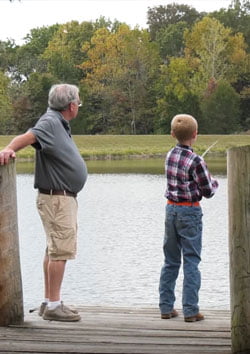
Valentine’s Day is fast approaching. If you haven’t started thinking about how you’ll be taking part in this tradition, you’d better start now.
The possibilities of a fun outing are endless, but it might require delicate planning on your part to make sure the weekend goes smoothly. Take inventory of what she enjoys and plan a day around that. Don’t forget to make sure the day includes something you enjoy, too.
If you come to Cedar Creek, you can participate in activities both together and separately — if that’s what you choose. For instance, she can spend the afternoon on the hiking trail while you shoot some pool. Then, you can come together for a romantic four-course dinner made by the award-winning Chef Connolly in the evening.
Once you have your romantic weekend getaway all planned, you might be tempted to just go into cruise control and just “let everything play out”, but remember that a lot of effort goes into building a great romantic weekend getaway. Make sure you have the details all locked down before you set out on your way.
If you’re unsure of where to start, we have some tips to help get the ball rolling.
Planning Ahead

- Sitter: If you haven’t done so, now is the time to figure out arrangements for the kids. Will they stay with the grandparents or will you hire a babysitter for the weekend? If you choose to hire a babysitter, make sure a relative or someone close to your family is on call, just in case the sitter backs out at the very last minute. We won’t give hard figures since each budget is different, but be prepared to pay the babysitter well. After all, it is for an entire weekend.
- Reservations: This seems like an obvious task, but people do forget. For Valentine’s Day at Cedar Creek, we are offering a four-course dinner in the Town Hall Restaurant prepared by our award-winning chef, Dennis Connolly, followed by dancing. Reservations aren’t required, but they are highly recommended. And, of course, we welcome you to stay the night in our cozy Cedar Lodge or one of our beautiful historical houses on the property. If you’re planning on joining us for dinner but staying at another hotel instead, we still recommend that you make reservations for dinner as far out as you can, even though they are not required. Having to wait around, hungry, with others who didn’t make reservations can really kill the buzz of an otherwise flawless romantic weekend getaway.
- Gifts: Gift giving is incredibly fun, especially when it’s for someone you truly care for. But it can be tricky to figure out what she’s going to enjoy most. For that, you may want to solicit the advice of a platonic female friend or even a sister. They can help you determine good gift ideas, and once you settle on a gift, they can go with you to help pick out the perfect brand, color, type and so on. Gifts can be very expensive, especially if you choose to buy something such as a designer purse, clothes or jewelry. We guys sometimes want to impress women by buying things a little out of our price range, but it’s often not always the price tag that makes a gift perfect. Make sure you’ve already planned out how much you are able to spend and try to stick to that.
Finally, don’t forget to buy a card, wrapping paper and a bow. Going all out with the presentation can really put a smile on her face.
The Friday Before

As you get closer to your romantic weekend getaway, you might once again be tempted to check in to Fantasyland and forget about the necessary preparations. DON’T! Keep in mind a few things right before executing Operation Romantic Weekend Getaway:
- Outfits: You wouldn’t want to make the trip all the way out to Cedar Creek (or any other place) and then realize you forgot your slacks and jacket for a nice dinner.
- The little things: If you bought a present, make sure it’s wrapped. Candles, a nice playlist and chocolates can go a long way and will surely make her smile. Take the extra step and think about the little things. You won’t regret it. You might want to ask the hotel what they offer. For example Cedar Creek offers add on options for their guestrooms such as bottles of wine, roses & chocolate covered strawberries.
- Double-check with the sitter: Make sure your sitter didn’t forget and make other plans — the last thing you want is for that person to suddenly bail on you for better plans. (If that does happen, let’s hope your mother loves her grandkids.) Also, make sure the sitter knows what time they need to arrive to your house and when they can expect to leave.
Saturday

The day has arrived. And, if you did everything right, all of the hard work has been taken care of and now your job is to simply enjoy the day.
Looking to make reservations for your romantic weekend getaway to Cedar Creek? Click here.
The beginning of the year is a great time to get everyone at the company on the same page. Companies often add new employees to the ranks within the first month. New goals have been outlined and the company vision going forward has been set.
Now is the time to get people excited about 2015. But with employees scattered among different offices and priorities shifting constantly in a fast-moving business climate, it can be tough for employees to even get to know one another, much less move in the same direction.
In addition to all-company meetings, many organizations want to incorporate team-building activities into the schedule. These can be a great way for people to learn more about their co-workers, establish rapport and have fun. However, some team building activities are more effective than others. The best have a particular mission attached to them.
Here are some team building activities you might want to look into and the specific objectives they accomplish:
Obstacle Course

Build an obstacle course either in a large room or outdoor field. Each member of the team will take turns going through the course blindfolded, with the rest of the team members guiding verbally. When going through, prepare to feel confused and bump into things. When guiding, expect to feel frustrated that your message isn’t always getting across.
What the activity accomplishes: Building effective communication skills, learning to overcome challenges.
Lego Tower

Break off into several teams. Each team has a certain number of legos and the goal is to make the largest tower possible. Or reach a certain height in the fastest amount of time. Or making the most cost efficient tower. Whatever the end goal, the group likely will need to reconfigure or even start over numerous times.
What the activity accomplishes: Becoming a better listener, learning to delegate responsibility, thinking outside of the box.
Speech Writing

The group is assigned to develop and deliver a speech about a specific topic and each person is tasked with writing a specific portion and delivering that portion to the other attendees. The objective is, despite different writing and delivery styles, to make the speech come across as fluid as possible.
What the activity accomplishes: Fostering collaboration, enhancing both oral and written communication.
Video Biography

People are broken off into pairs and given a video camera. They are required to produce a one-minute video about the other person, and then everyone sits down and watches the videos together. The activity doesn’t have to involve competition, but it can.
What the activity accomplishes: Learning about team members more in-depth, building creativity, storytelling.
Sometimes, you aren’t necessarily looking to do these team-building activities in the strictest sense of the word, but are looking for events to get the team together for a fun excursion. Again, have an idea of why you want to do these activities, other than just for “having fun.”
Community Service

Community service projects are very popular at companies. They provide a great way to reach out to the local community while also getting team members inspired and working together. Research has shown employees, especially millennials, place an emphasis on a company’s do-good image, so these types of projects can also retain talented employees.
What the activity accomplishes: Making a difference, networking, providing a good name to your firm.
Bowling

We have reservations about this since sports aren’t always a great team-building activity. Some people can’t or choose not to partake, and less-skilled individuals who do end up participating often feel self-conscious. But bowling is often an exception since the majority of people can’t knock down pins to save their life. People can cheer one another on, and the bad bowlers can laugh it off. Plus, there is plenty of time to get to know each other between rounds.
What the activity accomplishes: Friendly competition, getting to know each other better.
Cooking Class/Competition

A cooking class maintains the balance of fun but low-key. This activity can involve traveling offsite or having a culinary instructor come to the workplace or visit an employee’s home. The instructor facilitates the class but the participants (preferably in groups) create the dish from scratch. Also, you could consider having a cooking showcase in lieu of a class. At the end, people have the opportunity to try one another’s dishes and, if it involves competition, vote for the winner.
What the activity accomplishes: Learning to try new things, building collaboration skills, promoting a healthy lifestyle.
Have more good ideas for effective team building activities? Feel free to drop us a line.
Beers come in all different flavors, colors and textures. Some people enjoy lighter, others enjoy darker. Some enjoy hoppy beers, others not so much. And some beer aficionados enjoy drinking all different beers, ordering a new one every visit to the bar.
Perhaps you are one such aficionado, or maybe just the casual beer drinker. A beer tasting outing can satisfy the most novice of drinkers to the biggest connoisseurs. But beer tasting doesn’t just mean blindly going to a bar and downing a few different drinks. It instead involves a whole process of preparing your senses for an enriching drinking experience.
Beer tasting soon? Here are six tips to improve the occasion:
- Look, swirl, smell taste: These four steps are the key to any beer tasting activity. First, look at the beer to gauge its true color, head and consistency. Then, swirl the beer gently in the glass to bring out the beer’s distinct aroma and flavor. Next, smell the beer through your nose to stimulate senses. Finally, sip the beer without immediately swallowing to let the flavor move around your pallet.
- Check the way you pour beer: Pouring beer is definitely an art. If drinking a full glass, first pour at a 45 degree angle, and then move up to a 90 degree angle once the glass is half-full. Begin pouring gently and then become more aggressive as the glass fills. Both these techniques allow the aroma to stay trapped in the glass.
- Environment matters: Beer tasting involves all five senses. Therefore, the environment you choose to drink in can either enhance or detract from your experience. Drink in an environment soothing both mentally and physically. Drink under natural light and not artificial light (such as fluorescent lighting). Tasting in an environment without excess noise will also enhance the experience, making you less distracted when tasting.
- Mild first, bitter last: When tasting a variety of different beers, make sure to drink the mild, sweeter beers first and hold off on the thicker, bitter beers. If you drink bitter too early, the taste buds could become overstimulated, leading to a weaker taste for the sweeter beers.
- Avoid smoking: Smoking dilutes a person’s sense of smell and taste, making beer less pleasurable to the tongue.
- Same goes for greasy foods: True, greasy foods do help better process alcohol. But beer tasting shouldn’t involve drinking that much alcohol. Rather, eating these foods either before or during the tasting will just leave residue on the lips and pallet that can dilute the head retention of the beer. If you really need something between drinks, dry bread, salt-free crackers or even ice water.
Global business travel spending is expected to reach a record $1.18 billion in 2014, up nearly 7 percent from 2013. Much of that travel will involve traveling and participating in corporate meetings and conferences.
Corporations are clearly willing to host meetings out of town and spend more handsomely on them. But the way meetings have been planned and conducted have gone through significant change. Gone are the days when people travel to some random city and expect to sit through meetings before catching their flight home. In order for meetings to be most effective, they need to be lively, engaging and have some sort of fun group activities.
When planning a meeting and selecting a place to host the meeting, take into account some of the following tips and trends:
- Corporate meeting rooms are not a one-size-fits-all kind of thing: When people think of a corporate meeting room, they often think of a stereotypical corporate boardroom with plush furniture where people sit around in a circular fashion. That works fine in some capacities.
But not every meeting should be that way. Simply put, the type of corporate meeting room should be based on the agenda at hand. If someone is giving a presentation, perhaps a theater-like venue is the way to go. Looking for more cooperation? Perhaps a more open-space venue will do. Looking for more group activities? Look to a place with lots of smaller meeting rooms.
- Neither are meeting venues: Obviously, you must take into account who will be attending this meeting. What might appeal to senior finance executives may not necessarily work with an all-company meeting for an advertising agency. Simply put, the target attendee, as well as the subject at hand, will determine the location and venue of the event.
- It is about the experience: When people go to corporate meetings (especially out of town), people want it to be more than just a business meeting. Rather, they want it to be a part of a larger experience in order to truly make the travel worthwhile.
When planning a large meeting, try to incorporate an all-encompassing experience. For instance, try to give away mementos and prizes focusing on the specific city at hand. If the meeting is taking place at a retreat center, try providing a host of different activities (golf, hiking, etc.) during the evening that allows people to take their mind off work.
- The meeting takes place before and after the “official” meeting: With the rise of social media in every aspect of our lives, people will be talking about the “meeting” both before and after the actual meeting. Not only should you be aware of this, but you should also take advantage of this opportunity to promote your company/organization.
How so? How about a hashtag for the event that people can follow while they travel there. Perhaps a prize may be in order for the best Tweet leading up to the big event? Or even a good-old raffle drawing may do the trick to get people excited.
CAVEAT: If the meeting will be discussing private company matters (financials, M&A, personnel, etc.) it needs to be made abundantly clear that social media will not have a role in that particular meeting. In 2014, you can’t assume that people will keep quiet unless you tell them explicitly, especially if they are not in a role that often requires them to zip their lips.
- Technology, technology, technology: It’s 2014—which means that the technology at the meeting better be stellar. This means high speed Wi-Fi connections should be available throughout the event venue. Make sure that any information that you provide in a large binder is easily accessible through a smartphone or a tablet. Make sure that the projectors and video technology used throughout the meeting are up to date.
But take it further: If the meeting is a large conference, be sure to utilize conference event guide apps. Alluding to point 4, make sure that people have ample the opportunity to connect and share their experience through social media and other apps geared at connecting meeting/conference-goers.
Cedar Creek offers modern conference facilities to accommodate groups large or small. Our thoughtfully designed meeting rooms and break areas provide you with the flexibility needed for informal discussion, committee, lecture, or executive meetings. Need help in the planning process? Download our corporate retreat checklist.

Missouri has incredibly fertile farmland, making it the perfect home for vintners (winemakers), viticulturists (scientists of grapes), and vignerons (cultivator of a vineyard) alike. In fact, Missouri is the first state in the country to establish a regional wine identity, with Augusta being named as the first viniculture area in the U.S.

French settlers first began to cultivate grapes in Missouri in the late 18th and early 19th centuries. German settlers greatly increased the production of grapes after establishing in the “Little Rhine” region of Missouri. By the 1900s Missouri was a leading producer of wine grapes and award-winning wines.
Currently, there are approximately 118 operating wineries and 393 vineyards in Missouri, producing more than 4,400 tons annually on 1,600 acres. Overall, Missouri’s wine and grape industry is valued over $1.6 billion, with more than 490,000 cases of wine produced.
Here in New Haven, Robller Vineyard and Winery has been growing grapes for wine since 1988 with the intent to create soft, young wines, rich with fruit qualities. Their fermentation style earned them the Missouri State Wine competition’s Best of Show honor in 1993 with their 1991 Norton Reserve, an impressive feat considering it was Robller’s second vintage. Numerous state and national awards have been awarded since 1993, but their fermentation process has remained the same.
At the present, Robller Vineyard and Winery cultivates 9 grape varieties on 16 acres of land, with each acre producing 3-6 tons of grapes annually depending on the variety, which includes:
- Chambourcin: (sham-bor-san) produces a medium-bodied red wine with a fruity aroma and cherry and earthy/spicy complexities, much like a Pinot Noir.
- Norton: (sometimes called Cynthiana) is a native Missouri grape that produces a rich, full-bodied red wine that improves with age. Nortons typically have a dry character, similar in style to Cabernet Sauvignon, yet with the spiciness of a Zinfandel.
- Seyval: (say-vahl) makes a dry, clean, crisp medium-bodied wine with an herbal, fresh flavor, similar to Sauvignon Blanc.
St. Vincent: a hybrid that makes reds of delicacy and elegance. Often used for Nouveau-style wines, it also can have a Burgundian character and is occasionally slightly sweet. - Steuben: Steuben wines are popular as single-variety reds but more often appear as rosé or blush wines. The variety is particularly suited to the production of sweeter wines, as it retains high levels of sugar and is not very aromatic. Steuben wines are most often light, sweet and grapey, with a spicy tang. Rosé wines exhibit strawberry and raspberry notes with hints of tea leaves and cinnamon. Red wines are made in a drier style with cranberry notes and a certain tartness.
- Traminette: A Gewurztraminer hybrid that produces excellent wines similar to Gewurztraminer with much more winter hardiness than its parent. The vines are productive and moderately resistant to powdery mildew. Typically, wines made with some skin contact have strong spice and floral aromas, a full structure, and long aftertaste. Wine can be made dry or sweet, but is usually finished with some residual sugar. Varietal descriptors include floral, spicy, perfume and lavender.
- Vidal: (vee-dahl) is a white hybrid used to make a dry to semi-dry, full-bodied wine with fruity characteristics, similar to Italian dry whites. Vidal’s clean citrus flavors of lemon and grapefruit create a nicely balanced wine.
- Vignoles: (veen-yole) is a versatile grape that makes wines ranging from dry to a late-harvest dessert wine. Luscious floral aroma and fruity flavors of pineapple and apricot are somewhat similar to a German Riesling.
- Villard Noir: A French-American hybrid variety with one of its parents being Pinot Noir. The wine is similar to Pinot Noir in character but has more rustic quality in depth and complexity. Cherry is evident from aroma to finish.

Just like all Missouri wines, Robller Vineyard and Winery’s wines are most notably known for their consistent scores in wine evaluation. This includes:
- Appearance, including the color of the wine, reflectance, clarity, body, and, if a sparkling wine, the size and quantity of the bubbles and mousse. (known as the “See” and “Swirl” steps in wine judging)
- Aroma, which is defined as the odors of wine that originate in the grape while bouquet odors originate in fermentation, processing, or aging (particularly after bottling). (known as the “Sniff” and “Savor” steps in wine judging)
- Bouquet, Bouquet odors are a result of yeast selection; the type of fermentation (e.g., cool fermentation, carbonic maceration, extended maceration, malo-lactic fermentation); wood exposure; and the aging process in the bottle. (known as the “Sniff” and “Savor” steps in wine judging)
- Taste/Texture, sensations are recorded during and after a small portion of wine is sipped, “breathed over” and spit. (The term “breathed over” refers to the technique of drawing air through slightly opened lips as a small amount of wine rests on the tongue.) The use of descriptors is important to detail the features of the wine. The taste of wine also includes sweet, sour, bitter and salt. (known as the “Sip” and “Savor” steps in wine judging)
However, we don’t want you to just take our word for it, which is why we are giving you three simple steps to help choose the perfect wine for your palette moving forward:

1) See the wine.
Note the color of the wine. The darker shade of a white wine indicates maturity, which impacts the richness and complexity of the wine. The brighter shade of red, the younger the wine. Red wine lightens with age and maturity, which can be noted on the circumference of the outer edges of the wine in the glass.
Note the opacity of the wine. The wine color’s depth or opacity is a measure of how dark it is. How easily can you see through the wine? Descriptors you can use to describe the depth of color include watery, pale, medium, deep, dark, or opaque.
Note the viscosity of the wine. Viscosity, aka “the legs”, are the stripes of wine that slowly roll down the sides of your glass after swirling the wine. Several factors can influence the viscosity, including sugar, alcohol content, and concentration of solutes. The more of each you have, the more viscosity you will see.
2) Smell the wine.
Primary aromas come from the grapes, and are described as various fruit, herbs and flowers.
Secondary aromas come from the yeast and fermentation process.
Tertiary Bouquets come from the aging, oxidation, and oak used, and are described as various spices and nuts.
3) Taste the wine.
What flavors are present?
What is the structure of the wine? (Sweetness, acidity, tannin, body, and alcohol)
What is the profile? Was the taste strongest at the front, middle, or end?

Robller Vineyard and Winery offers more than 10 varieties of wine, catering to the novice and connoisseur alike. Tastings are offered daily, Monday through Saturday 10:00AM to 5:30PM, and Sunday 12:00/noon to 5:30PM. During Oktoberfest Robller will be offering live music and more.
As always, if you making a weekend getaway out of your visit to New Haven, Cedar Creek offers a variety of lodging options for groups large and small. Stay in our cozy rooms in Cedar Lodge, or rent a cottage house for the entire group. For more information, please contact us.
Cedar Creek is located in the rolling hills of Missouri’s wine country. There are no city lights, just endless sky, which means that guests have an unobstructed view to watch the earth awaken and change throughout the day. Some of our favorite moments are watching the morning fog lift and the dew dissolve over a cup of hot coffee, quietly observing as one of nature’s storms roll in, and even relaxing at the end of day as the sun sets on the horizon. However, the most beautiful time at Cedar Creek is the night. First you will see the planets appear (they shine), followed by the Western Star, then millions of tiny stars (they twinkle) consume the sky. The amount of stars you see in an open country setting is more than double what you would see in the city on a clear night, and we don’t have the words to describe the feelings and emotions you will experience in that moment- it truly is breathtaking, magical and inspiring, and we urge you to come out and experience at night at Cedar Creek for yourself. Having said that, as we near the end of 2014 and prepare for 2015, Mother Nature has some amazing plans for the night. The most recent will be the Total Lunar Eclipse on October 8, and the Draconid meteor shower on October 8
The Total Lunar Eclipse on Oct 8 is the second in a tetrad, a series of four consecutive total lunar eclipses in 2014 – 2015.
Eclipses of the Moon happen when the Sun, Earth and Moon are aligned to form an almost or exact straight line. The technical term for this is syzygy, which comes from the Greek word for being paired together.
During a total lunar eclipse, the Sun, Earth and Moon form a straight line. The Earth blocks any direct sunlight from reaching the Moon. The Sun is behind the Earth, so the Sun’s light casts the Earth’s shadow on the Moon. This shadow covers the entire Moon and causes a total lunar eclipse.
The Earth’s shadow can be divided into 3 parts:
- Penumbra – the outer part.
- Umbra – darker, central part.
- Antumbra – a partly shaded area beyond the umbra.
A series of 4 consecutive total lunar eclipses with no partial or penumbral lunar eclipses in between is called alunar tetrad.
The October 8, 2014 total lunar eclipse is the second total eclipse of the Moon in the 2014-2015 tetrad. The first one was on April 15, 2014. The last 2 total lunar eclipses in this tetrad will be on April 4, 2015, and September 28, 2015.
The 2014 Draconid meteor shower will also peak on October 8 and 9. The Draconid meteor shower, also sometimes known as the Giacobinids, is one of the two meteor showers to annually grace the skies in October. The Draconids owe their name to the constellation Draco the Dragon, and are created when the Earth passes through the dust debris left by comet 21 P/ Giacobini-Zinner. The comet takes about 6.6 years to make a single revolution around the Sun.
Although the Draconids have been responsible for some of the most spectacular meteor showers in recorded history, most recently in 2011, most astronomers and sky gazers consider these to be one of the least interesting meteor showers in during the year.
The Orionids are the second meteor shower in October. It usually peaks around October 21.

HOW TO TAKE PICTURES OF THE MOON
Mobile Camera or DSLR?
The challenge is to capture the details of the Moon’s surface. With most mobile cameras, you can’t manually set the exposure, which controls the amount of light in the image. Most likely, you will only manage to capture the light from the Moon, and the Moon itself might come out looking like a blurry dot of light in the sky.
Zoom, Tripod and Timer
Most mobile cameras also don’t have a very powerful zoom. A zoom of 200mm and above is needed to make to Moon the focal point of the image and to capture the surface details.
A tripod or another stable surface where you can place your camera is useful to keep it still during slow shutter speeds.
A remote shutter or the timer on the camera prevents the camera from moving or shaking as you shoot the picture.
Shutter Speed & ISO
- The moon is bright, so use a low ISO-setting of 100 or 200.
- Underexpose rather that overexpose the moon. The moon is bright and an aperture of at least 11 is recommended, letting in less light.
- In low light situations the shutter speed may have to go down.
- Use the viewfinder. It makes it easier to see your composition and settings.
- A foreground subject, like for instance the moon over a city or landscape, might make the image more interesting.
- Allow yourself enough preparation time.
- Keep shooting! Play around with different exposures and apertures.
If you making a weekend getaway out of your visit to New Haven, Cedar Creek offers a variety of lodging options for groups large and small. Stay in our cozy rooms in Cedar Lodge, or rent a cottage house for the entire group. For more please contact us.
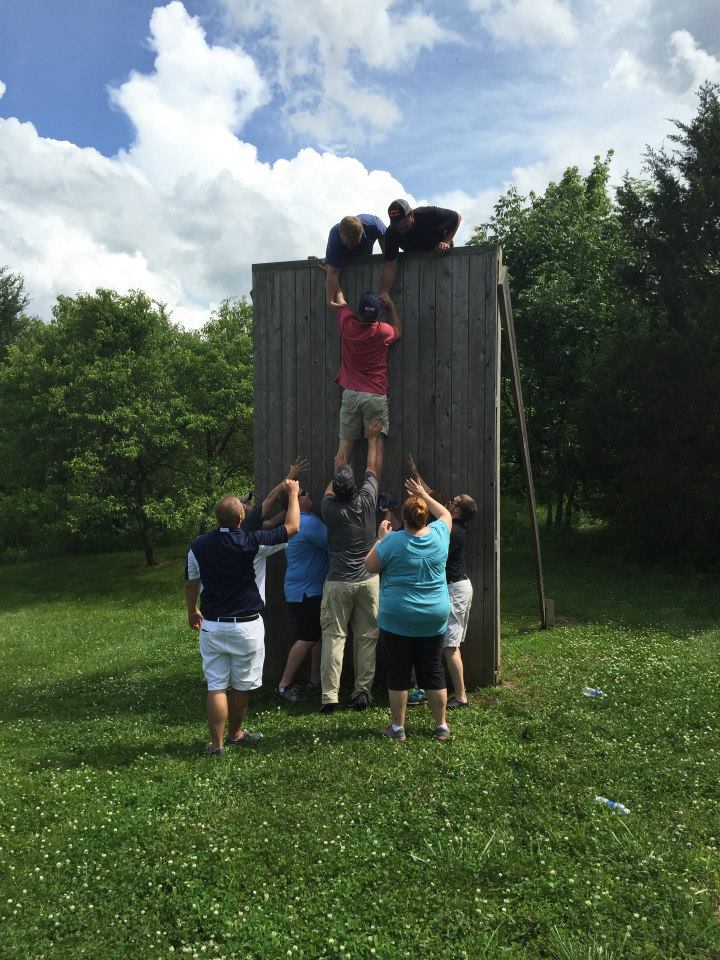
Gone are the days of lavish corporate retreats to faraway cities via private jet – and we don’t blame you. Who ever said you have to spend tens of thousands of dollars just to show your employees some appreciation?
The good news for management in 2014 and beyond: there are plenty of other ways to say “thank you” and “we appreciate your hard work” to your employees without throwing a boat load of cash at the wall. Turns out, it’s more than just corporate figureheads that learned their lesson; the American people had to make cuts too. We’ll even bet that your employees are proud to work for a more money-conscience company. It’s the smarter thing to do.
Join us as we uncover some tips to planning corporate retreats on a budget.
Tip 1 – Your Group Size Impacts Your Cost
A common misconception with corporate retreats: “the more the merrier!” This isn’t always the case with team building in mind, especially if you’re trying to save dollars on your bottom line.
With a niche group of people, perhaps those that you work with on a day-to-day basis, you can achieve a more productive task-focused retreat. Large groups are often unmanageable for several reasons:
- Work and family constraints limit scheduling flexibility
- Large groups equate to more costs, including travel, food, lodging and facility costs
- The larger the group, the less relevant that group of people will be. Define the roles that are essential to success and invite employees accordingly
Tip 2 – Choose A Destination Not Far From Home
There are plenty of great corporate retreat locations right in your backyard. Ok, maybe not literally, but several that are just a couple hours away. For you, that translates to lower costs and more convenience.
Operating in the St. Louis area? Consider taking your team to a nearby lake, state park, small town or winery. You could rent a bus that would accommodate your entire team for much less that packing up the bags and flying out of town. Plus, remote locations and retreats are usually a better fit for small/mid-sized businesses looking to get the biggest bang for their buck.
PS. Sometimes these local destinations throw in bonus items like free wine, upgraded rooms and discounted day excursions.
Tip 3 – Negotiate Price & Get The Deal You Desire
The dramatic shift from big to small corporate retreat budgets means that more and more facilities have increased inventory. You may want to consider throwing in a barter deal depending on the facility in your crosshairs. Offer to include the retreat information in your company’s newsletter or pass the word on to clients. Facility owners understand the power of word-of-mouth. Think of ways on how you can increase the facility’s awareness using your connections, and then offer it up for exchange.
Sometimes you’re not going to get the best deal for what you need. You’re going to need meeting rooms, audio/video equipment, wifi access and probably somewhere to rest your head. All of these factor in to what you’re willing to cut and expand on. Be prepared for what facilities might not offer.
Tip 4 – Consider Hobby Sports For The Masses
One thing’s for sure – your team doesn’t want to sit in a stuffy meeting room all day. You need to have some activities lined up, but not the type of activities that involve 143 hours of training. That means no 5 hour rounds of golf on private courses, no serious tennis matches and especially no quidditch matches.
Consider some hobby sports for your team. These might include things like flag football, fishing, biking, canoeing, hiking or even Frisbee. These sports don’t make less athletic types nervous about their performance, simply because they can choose what they want to do.
Other Considerations
Want something truly unique and close to St. Louis? Cedar Creek offers professional team building program coordinators who can help strengthen your team through a series on on-site activities, including our low ropes confidence course. Our program coordinators will work with you in advance to discuss your group’s goals and objectives, your current group dynamic, and your group’s fitness levels to tailor a plan specifically for your team. Each experience is unique, but all are designed to encourage teamwork, taking overall performance to a new level.
Lastly, check out our corporate retreat checklist. It was designed to provide you clarity in your planning efforts, from determining success criteria to identifying speakers to arranging outdoor activities. Not only will it help you plan, it will keep you focused as your corporate retreat is happening.
There’s a good chance you’ve heard some of golf’s misconceptions: it’s boring, it’s hard to play, and it’s for snobby businessmen. Golfers constantly have to deal with these false and widespread beliefs, and it’s Cedar Creek’s job to stand up for those that take pride in the sport.
Golf is actually one of the best sports for many reasons: it’s a game for all ages, it can be competitive for all skill levels, and it’s great for team building and building business relationships. And at Cedar Creek’s 9-hole golf course, you can experience just as much charm and challenge as many 18-hole courses.
So, sit back and take in a short, 500-word lesson that will have you shaving strokes off your scorecard in no time.
Choose a Decent Golf Ball

Perhaps the only sport where you get to choose your own ball and most amateurs don’t take advantage of this. If you can learn one thing from the pros, know that they choose a ball that helps them with certain aspects of the game, such as achieving more spin, lower drives, or shorter wedge shots.
Amateurs, especially mid- to high-handicap ones, should consider a ball that is built for distance and minimizing spin. The result is longer and straighter shots. Also, distance balls don’t feel like a heavy weight when you hit them because they’re made extra soft for added feel and performance.
Some balls to consider:
- TaylorMade SuperDeep, $20
- Srixon Q-Star, $25
- Bridgestone e6, $27
Put Down the 3-Wood, Pick Up the Driver

We’ve seen so many amateurs get up to the tee box, and with lack of confidence, choose the 3-wood as their go-to driver. Sure, fairway woods have come a long way, but sometimes you just have to choose the bigger stick. Drivers are both longer and bigger which means a more forgiving stroke.
The driver is more versatile, meaning that you can choke down on the grip, swing with less force and make a three-quarter swing. So the next time you approach the tee box with doubt, remember that the driver really is your best option. Swing easy and let the ball release.
Grab Your Driver for Bunker Shots

Running with the same theme, your driver can also be used for more than just the tee box. The next time you’re in a bunker with a firm, clean and slightly uphill lie, grab your driver and give it a shot. Oh yeah, just make sure that you don’t have a big lip in front of you – this is usually the area where the sand meets the grass.
With the above guidelines taken into consideration, play the ball as you normally would, with the ball in front of your stance. Obviously, your swing shouldn’t be 100 percent, but you should swing as hard as you can without your feet sliding around. It’s okay to hang back on your swing while letting the club do the work.
Putt from Above the Hole

Is your ball fairly close to the green and higher than the hole? If so, try using a putter to knock it in. This works especially well for downhill lies. The longer grass will slow the ball down just before entering the green, and you won’t have to be afraid of the ball taking flight well over the hole. Just give it a few practice trials before you start your round and you’ll wonder why you ever tried to chip similar shots in the past.
Want a great golf experience for your next team building, corporate retreat or weekend getaway outing? Cedar Creek’s 9-hole par three golf course is great for just that! Enjoy scenic countryside views as you better your game with the above tips.